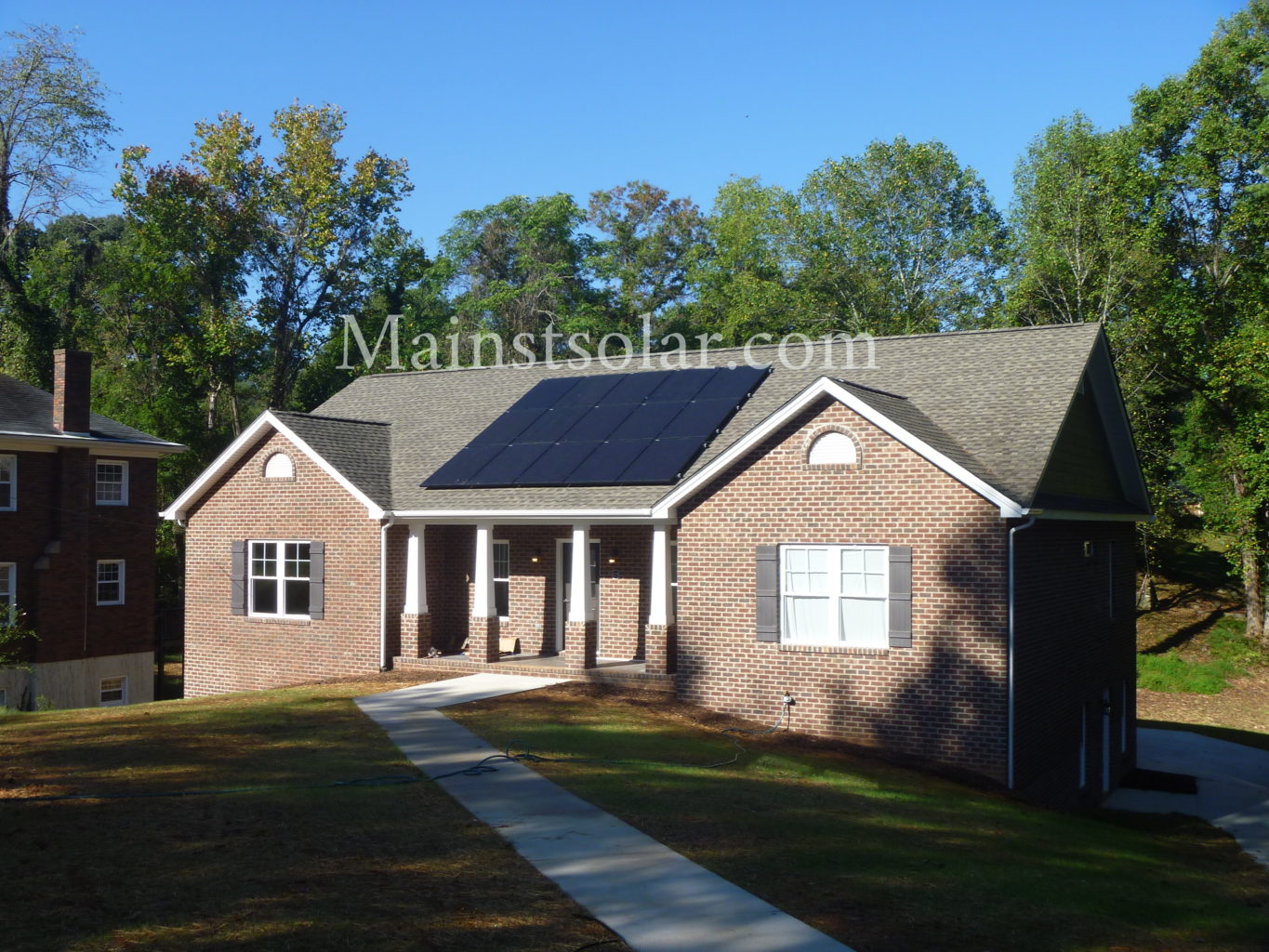
A battery based system is made up of several different components. These include solar panels, batteries and a charge regulator or controller, an inverter which converts the DC current to AC current; wiring; and mounting hardware or a framework. Although a small amount of energy is lost in converting DC to AC (typical inverter efficiencies are in the range of 90 to 95%), an inverter makes solar generated electricity behave like utility power to operate everyday AC appliances, lights, and electrical equipment. Please note that you will need a special type of inverter if you want a battery backup system. For safety reasons most grid-tied inverters are designed to shut down completely if there is a power failure. The charge controller prevents the solar panel or array from overcharging your battery. Batteries are the energy storage for your system. Without batteries there is no way to store the energy your solar panels produce during the day and provide you with the energy you need at night. Typically loads receive their power from batteries instead of directly from the output of a solar panel. The solar panel is the basic building block of the system. This is your battery charger. If you have several solar panels wired together you have created a solar array. The size of the solar array determines the amount of power or energy that will be produced.
Solar for Homes and Businesses in Virginia