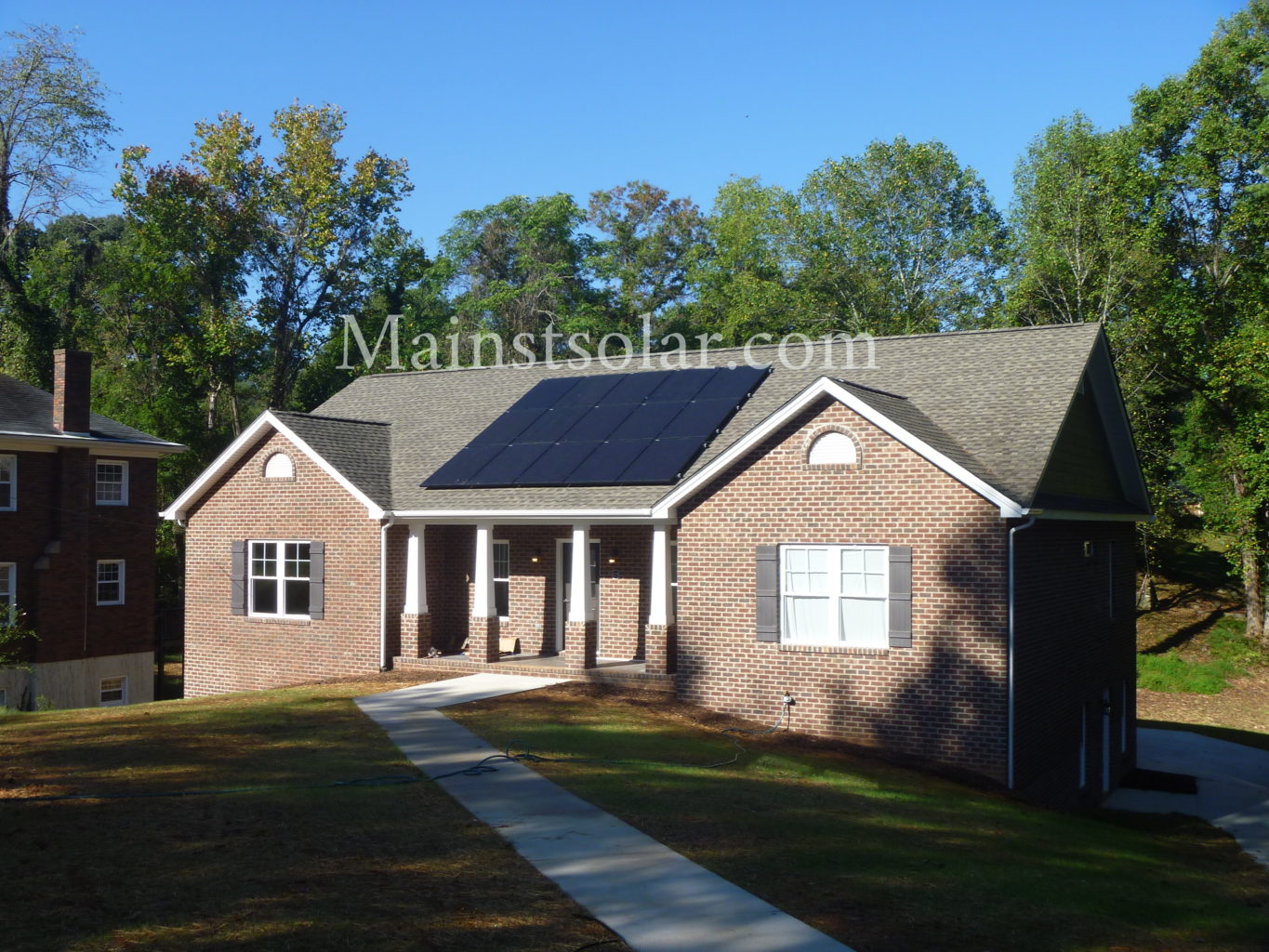
- When sunlight shines on solar panels they produce Direct Current (DC). That DC electricity is converted into household AC power by your power inverter, and it is then available for household use. This process happens silently and automatically every day.
When a grid-tie solar electric system generates more power than you are using in your home, the excess electricity is sent out into the utility grid. The excess power going into the grid spins your meter backwards, allowing your neighbors to use clean, quiet solar power. If you use more power than your system is producing, your inverter will automatically pull the needed power from the utility grid – and you will never notice a thing.
This is back and forth process is called “net metering”, and it means you are only billed for the “net” electricity purchased over the entire billing period. At the end of each billing cycle your meter will not have spun as far forward when compared to not having solar electricity, saving you money. If you produce more than you use during a billing period, your utility company will retain it as a credit, which will then be applied to future electric bills.